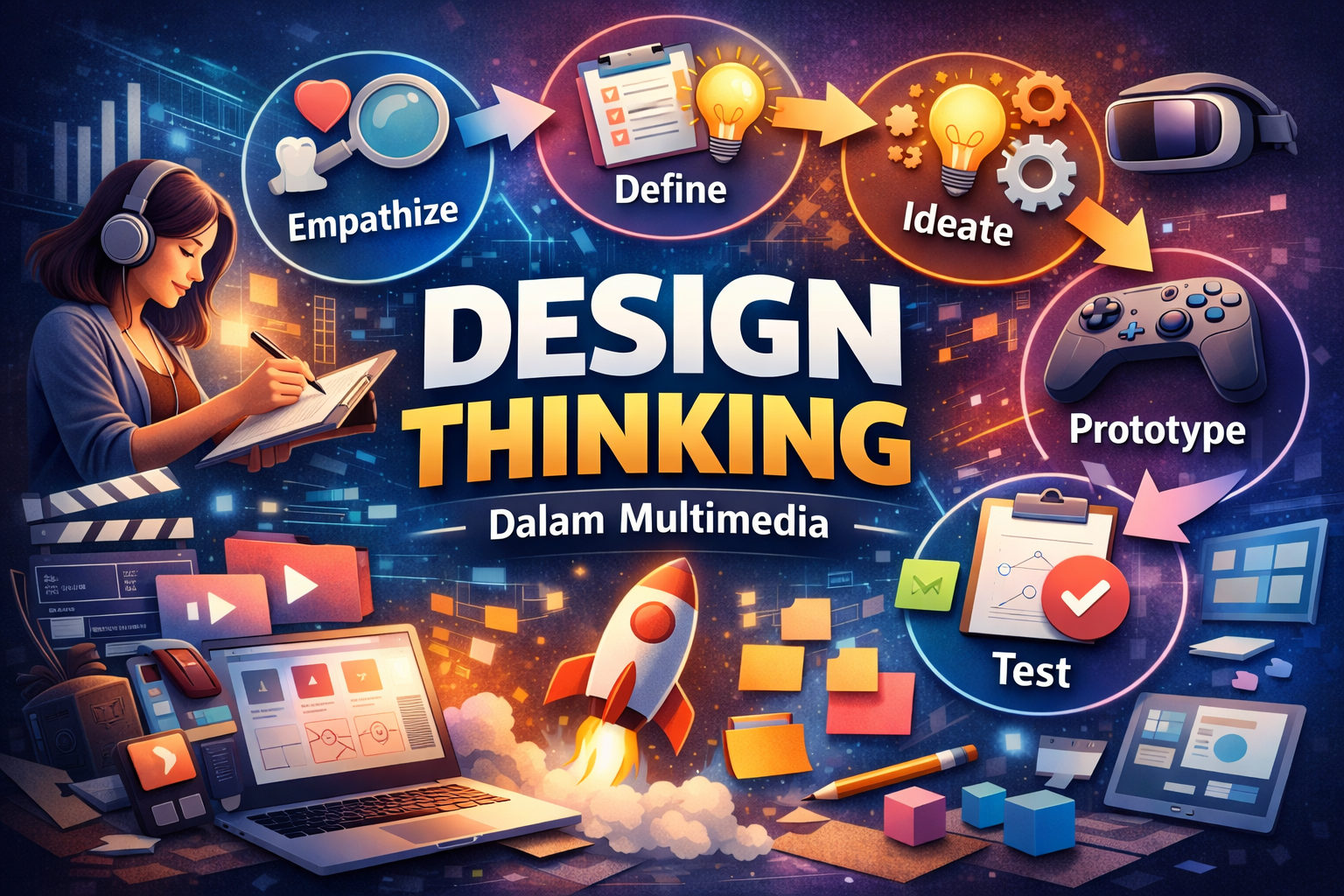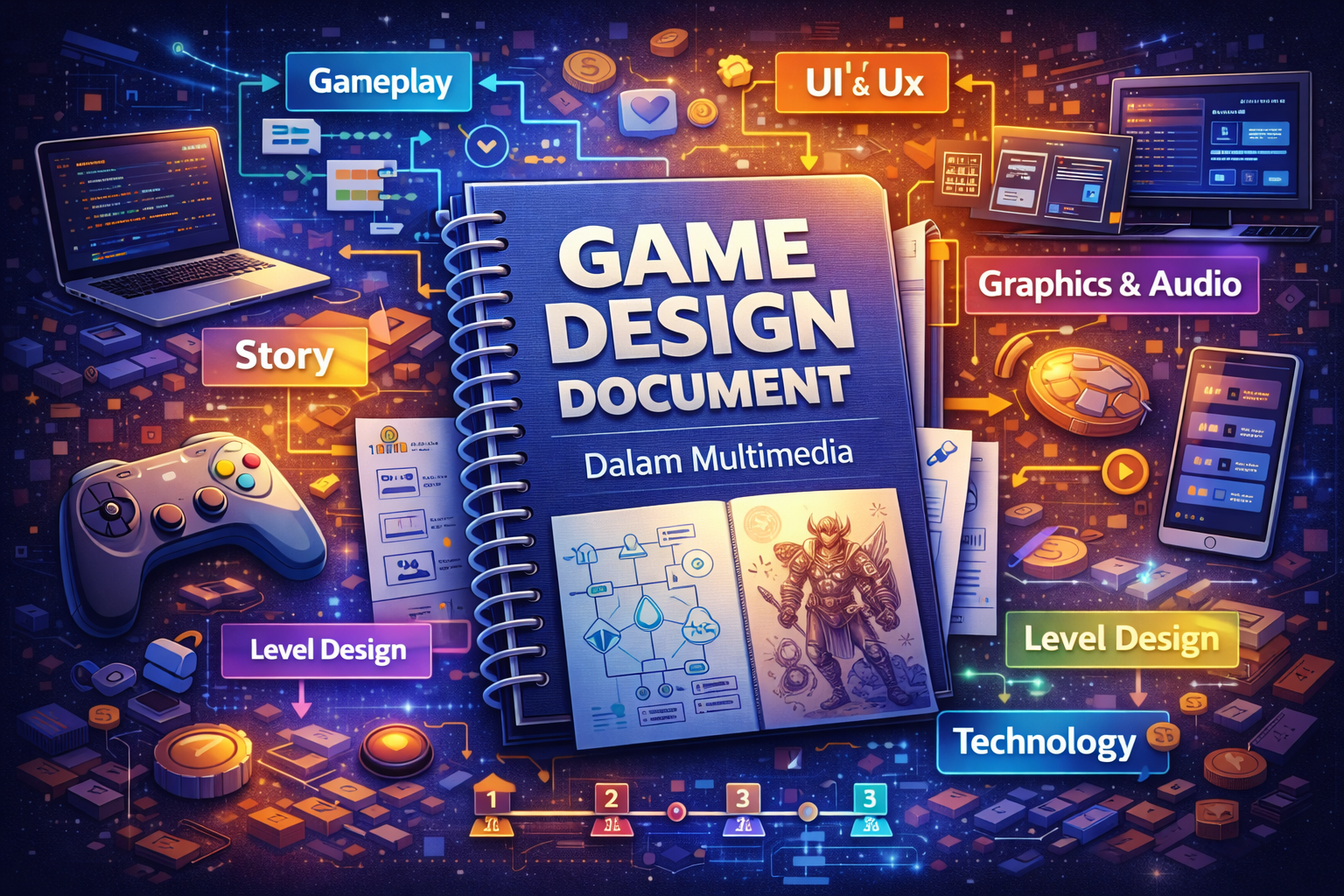
The game industry is one of the largest parts of the multimedia world that continues to grow rapidly. Game development requires not only creativity but also careful and structured planning. This is where the Game Design Document (GDD) plays its role. A GDD acts as a "map" or blueprint that guides the entire team—from designers and programmers to artists—so they work toward the same vision.
What Is a Game Design Document (GDD)?
A Game Design Document (GDD) is a detailed document containing all aspects of the design and development of a game.
A GDD covers:
- Basic game concept
- Gameplay mechanics
- Storyline
- Character design
- Level system
- Technology used
This document is dynamic and can be updated throughout the development process.
Purpose of a GDD
- Serving as the primary guide in game development
- Aligning the vision among team members
- Reducing miscommunication
- Facilitating the production process
- Acting as a reference for evaluation and future development
General Structure of a Game Design Document
1. Game Overview
Provides a general summary of the game.
Content:
- Game title
- Genre (RPG, FPS, Adventure, etc.)
- Target platform (PC, Mobile, Console)
- Target audience
2. Gameplay Mechanics
Explains how the game works.
Examples:
- Control system
- Game rules
- Scoring system
- Progression system
3. Story and Narrative
Describes the story flow within the game.
Content:
- Main plot
- Characters
- Dialogue
- World building
4. Level Design
Organizes the structure and challenges within the game.
Includes:
- Map design
- Difficulty levels
- Game flow
5. Visual and Audio Design
Explains the aesthetic aspects of the game.
Visual:
- Graphic style (2D/3D)
- Color and theme
Audio:
- Background music
- Sound effects
6. User Interface (UI) and User Experience (UX)
Organizes the interaction between the player and the game.
Examples:
- Main menu
- HUD (Heads-Up Display)
- Navigation
7. Technology and Tools
Explains the technology used.
Examples:
- Game engine (Unity, Unreal Engine)
- Programming languages
- Supporting software
8. Timeline and Milestones
Organizes the game development schedule.
Content:
- Production stages
- Deadlines
- Completion targets
The GDD Creation Process
1. Idea Brainstorming
Gathering initial game ideas.
2. Initial Draft Preparation
Writing basic concepts into the document.
3. Team Collaboration
Involving various divisions to complete the GDD.
4. Revision and Iteration
Updating the document according to project progress.
Benefits of a GDD in Game Development
- Assisting team coordination
- Reducing development errors
- Speeding up the production process
- Serving as official project documentation
- Facilitating pitching to investors or publishers
Challenges in Preparing a GDD
- Requires high amounts of time and detail
- Must be constantly updated (not static)
- Risk of becoming too complex if not structured
- Requires intensive team communication
Implementation of GDD in the Game Industry
GDD is used in various types of game development such as:
- Mobile games
- Indie games
- AAA games (large scale)
- Educational games
Both small teams and large companies use GDD as a documentation standard.
A Game Design Document (GDD) is a crucial element in multimedia-based game development. With a good GDD, the production process becomes more targeted, efficient, and error-free. For students and practitioners in the multimedia field, understanding and being able to compile a GDD is an essential skill for producing professional, high-quality games.